Recent Collaborative Publications
-
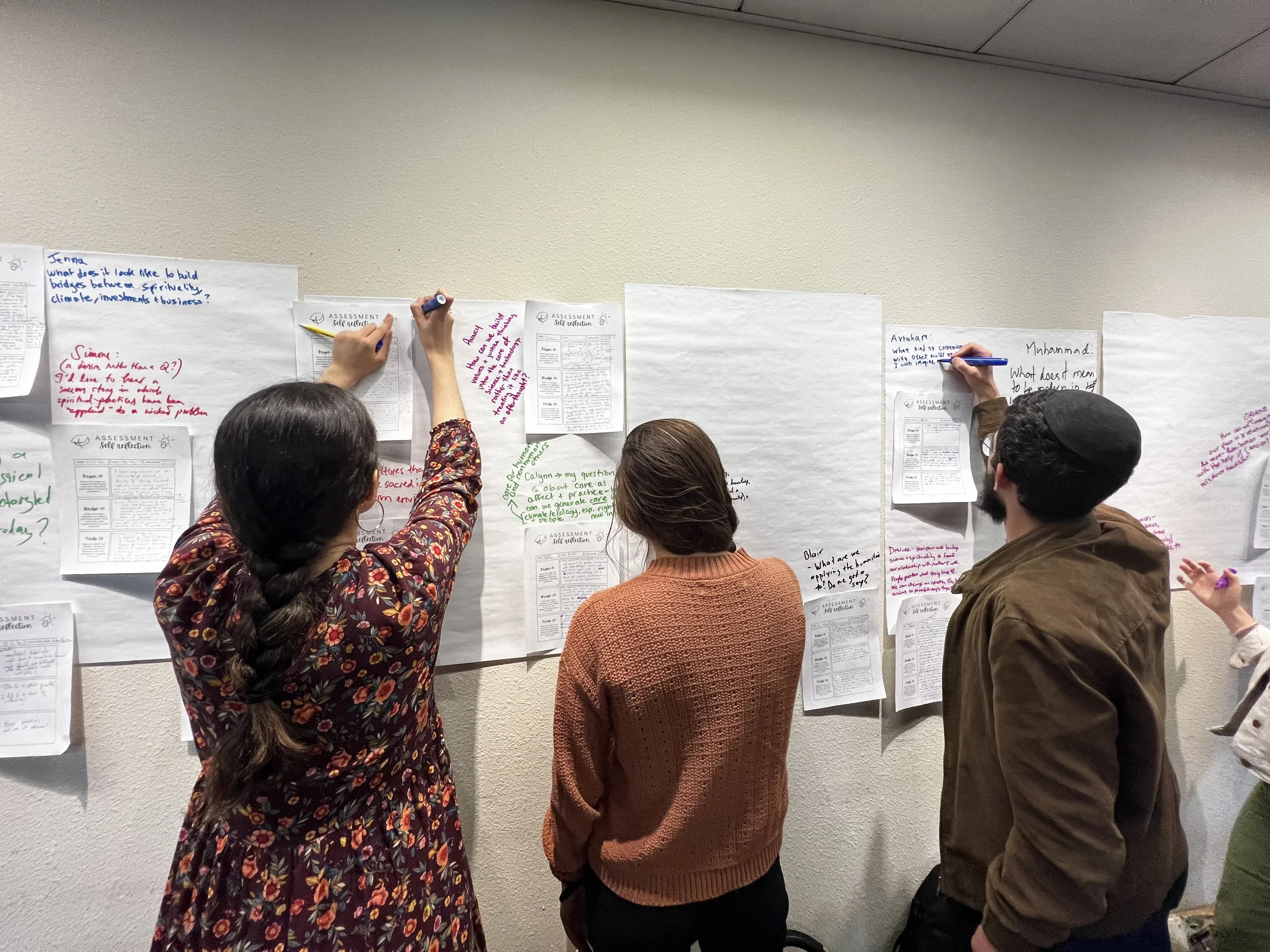
Abstract: The last three decades have witnessed a notable shift in sustainability research toward a more holistic, integrated, and community-engaged approach. This transformation, often described as a relational turn, has fostered interdisciplinary and transdisciplinary research that allows exploration and examination of the questions of climate change from a broader perspective. In this paper, we argue that these changes in sustainability research ought to inspire significant shifts in the ways that we, as scholars, gather to carry out research and scientific exploration. Academic conferences and workshops are field-configuring events that shape and guide the development of ideas, and we offer four design principles for planning relational gatherings: 1. Negative Space: Leaving “uninhabited” spaces in conferences, intentionally creating openings to foster spontaneous and collaborative creativity. 2. Embodied Practice and Choreography: Designing movement within the conference and acknowledging the embodied dimension of these gatherings, emphasizing the physical presence of bodies, spaces, and rituals. 3. Intentional Relational Work and Network-Making: Connecting people and ideas, encouraging networking and placing relational dynamics at the forefront of the gathering. 4. Ethics and Practices of Care: Integrating ethical aspects in the planning, ensuring the incorporation of relational values and ethics into the conference structures. To support innovative sustainability research, we must move beyond considering content and invest in reimagining the embodied aspects of the education systems that generate our knowledge. Relationally oriented conferences are designed to encourage the convergence of different fields--and of multiple types of participants--thus sparking generative tension along with fruitful conversation and long-standing collaborations.
Full citation: Sadan, Naama, Ariel Mayse, Oriane Lavole, Caroline Ferguson Irlanda, and Nicole M. Ardoin. "It’s not (just) about content: reimagining academic conferences for relational sustainability research." Journal of Environmental Studies and Sciences (2026): 1-9. https://doi.org/10.1007/s13412-025-01086-5 -
-
To compare and contrast rituals that advance connection to place, sense of emotional regulation in times of environmental crisis and pro-environmental collective action a ritual poll developed in collaboration with the Database for Religious History (DRH). This research tool includes in addition to classic question regarding ritual an eco-emotions scale and typology of ritual environmental functions with the expertise of the ACRE transdisciplinary team.
COLLABORATIVE PROJECTS
Our current collaborative research papers include:
A study of how applying multiple frames—scientific, social, economic, but also a sacred frame that highlights cultural and ethical significance—can enhance conservation management.
A theory of the importance of eco-rituals and their social, environmental, cultural, and spiritual significance;
An analysis of the ethics, and potential significance, of de-extinction technology;
An innovative model for twinning biological sciences with consideration of the cultural, spiritual, and philosophical significance of the animals and plants with whom we share life on this planet.
A new proposal for establishing the rights of nature.
We are also working to develop a formal protocol for collaboration and co-writing.